Emergency Fund: How Much Do You Really Need in 2026?
Your car breaks down on a Tuesday. Your hours get cut the following Friday. A root canal shows up the next month. None of these are rare, dramatic disasters — they are ordinary life in 2026, and they are exactly why so many Americans keep asking the same question: how much emergency fund do I need?
The honest answer is that there is no single magic number. A single renter in Ohio and a family of four in San Diego do not need the same safety net, and anyone who tells you otherwise is selling a slogan, not a plan. What you need is a number built from your expenses, your income stability, and your responsibilities — and a realistic way to get there. This guide gives you exactly that, with 2026 numbers, worked examples, and a step-by-step calculation you can finish in fifteen minutes.
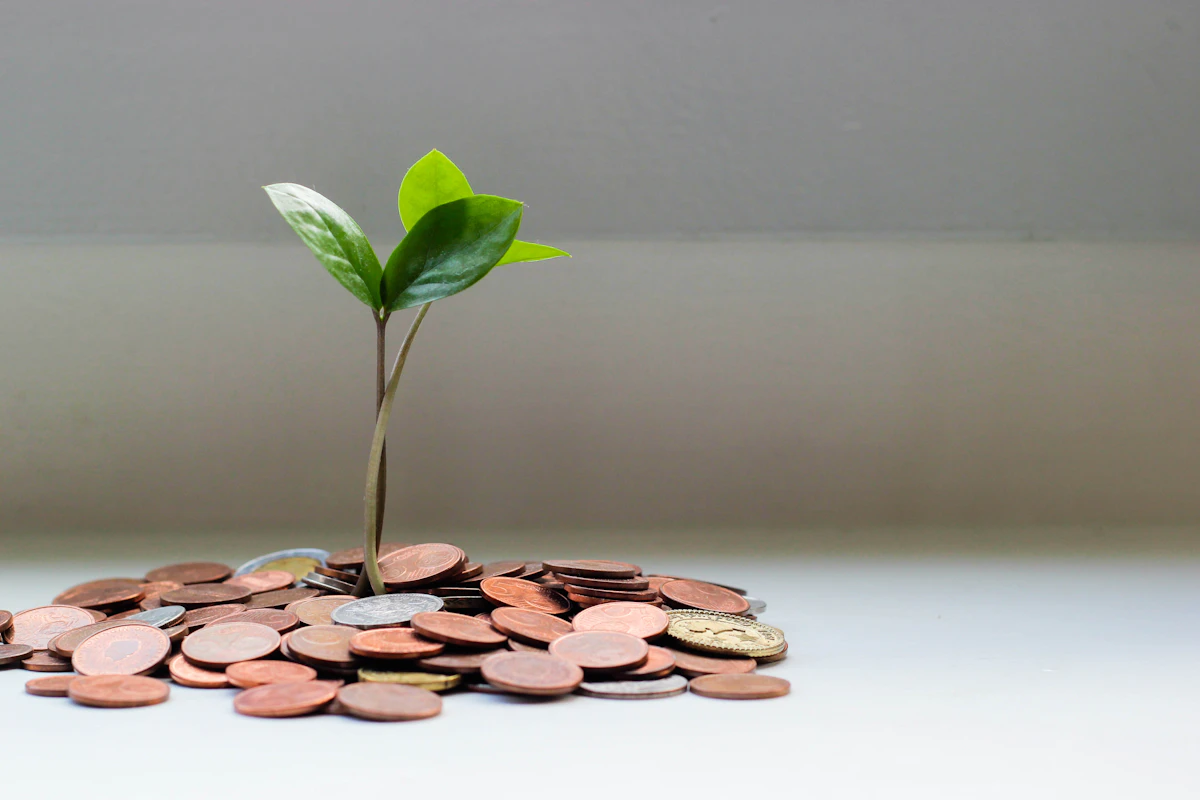
Cover photo: Unsplash
Step 1: Start With a $1,000 Starter Fund — Before Anything Else
If you have no emergency savings at all, do not aim for six months of expenses on day one. That goal is so large it paralyzes most people, and paralysis is how the next flat tire ends up on a credit card at 24% interest. Instead, your first target is $1,000.
Why $1,000? Because in 2026, that amount covers the most common financial surprises: a car battery and tow ($300–$500), a vet visit ($400–$800), a broken phone screen ($200–$350), or a minor home repair. It turns a crisis into an inconvenience. And psychologically, reaching $1,000 proves to yourself that saving is possible — which is half the battle.
How fast can you get there? If you can set aside $250 a month, you will have it in four months. At $100 a month, ten months. At $25 a week, ten months as well. The amount matters less than the habit. If you are starting from zero and want a concrete 30-day jump-start, our guide on how to save $1,000 fast walks through a realistic month-by-month approach, including which subscriptions to pause and what to sell first.
One rule while you build this starter fund: keep it in a separate savings account, not your everyday checking account. Money you can see every time you buy coffee is money you will spend. Out of sight really does mean out of mind.
3 Months vs. 6 Months: Which Target Is Right for You?
Once the $1,000 starter fund is in place, the real question begins: how many months of expenses should you eventually hold? The standard advice is three to six months — but which end of that range fits your life depends on how risky your income is.
Three months is usually enough if: you have a stable job in a high-demand field, you are single with no dependents, you have no major health issues, you rent rather than own a home, and you could find comparable work quickly. A teacher with tenure, a nurse, or a software engineer with in-demand skills generally falls in this group.
Aim for six months (or more) if: you are the sole earner in your household, you are self-employed or freelance, you work in a cyclical industry such as construction or tech startups, you have children or other dependents, you own a home with a mortgage, or you have a chronic health condition. If you lost your income tomorrow, how long would it honestly take to replace it? That is your answer.
Here is what the two targets look like at different spending levels in 2026:
| Monthly essential expenses | 3-month fund | 6-month fund |
|---|---|---|
| $2,000 | $6,000 | $12,000 |
| $3,000 | $9,000 | $18,000 |
| $4,500 | $13,500 | $27,000 |
| $6,000 | $18,000 | $36,000 |
Notice that the calculation is based on expenses, not income. That is the detail most people get wrong. If you earn $6,000 a month but spend $4,000, your emergency fund needs to replace $4,000 a month of spending — not $6,000. Basing the number on income inflates the target by thousands of dollars and makes it feel unreachable for no reason.

Photo: Unsplash
How to Calculate Your Own Number in 15 Minutes
Grab your last three bank or credit card statements and a calculator. You only need your essential monthly expenses — the bills you must pay even if your income stops.
Step 1: Add up the must-pays. Housing (rent or mortgage), utilities, groceries, transportation (car payment, insurance, gas or transit), minimum debt payments, phone, and insurance premiums. Leave out restaurants, streaming, vacations, and new clothes — in a true emergency, those stop.
Step 2: Average three months. Add the three monthly totals and divide by three. This smooths out an unusually expensive month, like one with a car insurance premium.
Step 3: Multiply by your months. Multiply your average by 3 if your income is stable, or by 6 if it is not. That is your full emergency fund target.
Two worked examples show how different the answers can be. Maya, 28, is a single renter in Columbus, Ohio. Her essentials — $950 rent, $180 utilities, $320 groceries, $260 car costs, $120 phone and insurance — total $1,830 a month. Three months is $5,490; six months is $10,980. Because her nursing job is stable, three months plus her $1,000 starter cushion is a sensible goal.
Contrast that with Daniel and Priya, a couple with two children in Austin, Texas. Their essentials — $2,100 mortgage, $420 utilities, $750 groceries, $680 transportation, $350 insurance and minimum payments — total $4,300 a month. Three months is $12,900; six months is $25,800. Daniel is a freelance designer, so six months is the right call for them. Same country, same year, wildly different numbers — which is exactly why a generic answer to “how much emergency fund do I need” is useless without the math.
If the number shocks you, remember two things. First, you do not need it tomorrow; you need a plan and a monthly transfer. Second, even a partial fund changes everything. Research from the Federal Reserve has repeatedly found that a large share of American adults would struggle to cover a $400 emergency expense with cash. Moving from $0 to $2,000 puts you ahead of millions of households — and that is a genuinely big deal.
Where to Keep Your Emergency Fund in 2026
An emergency fund has one job: to be there, in full, the day you need it. That rules out the stock market, crypto, and any investment that can drop 20% in a bad month. It also rules out your checking account, where it will slowly leak away on everyday spending.
The best home for it in 2026 is a high-yield savings account (HYSA). As of late 2026, many online high-yield savings accounts pay around 4% annual percentage yield — roughly ten times the national average for traditional savings accounts, which still sits near 0.4%. On a $10,000 fund, that difference is about $360 a year in interest, earned for doing nothing. Your money stays FDIC-insured up to $250,000, and you can usually transfer it to checking within one to two business days.
A money market account at a reputable bank or credit union is a fine alternative if you want debit-card or check access. What matters is the combination: separate from daily spending, safe, and reachable within a couple of days. Avoid locking the money in a certificate of deposit with early-withdrawal penalties, and do not keep large amounts in cash at home, where it earns nothing and is not protected.
One practical tip: open the high-yield account at a different bank from your checking account. The one-day transfer delay is a feature, not a bug — it stops impulse raids while still being fast enough for any real emergency.
Photo: Unsplash
How to Build It on a Tight Budget
“Save six months of expenses” sounds impossible when the budget already feels stretched. The trick is to stop thinking in lump sums and start thinking in small, automatic transfers that you barely notice.
Automate on payday. Set up an automatic transfer for the morning your paycheck lands — even $50 or $75. Money that moves before you see it does not get spent. If your employer allows it, split your direct deposit so part of every paycheck goes straight to the high-yield account.
Start with 1% of your income. If 10% feels impossible, save 1% this month, then raise it by one percentage point every month. In a year you will be at 12% without ever feeling a sudden squeeze. Slow and steady beats a heroic month followed by six months of nothing.
Capture windfalls. Tax refunds, work bonuses, rebates, and money from selling things you no longer use should go straight to the fund. The average federal tax refund in recent years has been close to $3,000 — for many households, one refund alone covers the entire $1,000 starter fund and a good chunk of the next milestone.
Find the leaks. Most people can find $50–$150 a month without feeling deprived: one unused subscription, one fewer takeout dinner a week, a cheaper phone plan. If you have never tracked where your money goes, our beginner's guide on how to start budgeting as a beginner shows a simple method that takes about an hour to set up.
Do not pause retirement saving entirely. If your employer matches 401(k) contributions, contribute at least enough to get the full match — that is an instant 100% return — and build the emergency fund with what remains. But if you are carrying high-interest credit card debt, building the $1,000 starter fund first, before attacking the debt aggressively, prevents the next emergency from going straight back onto the card. For that debt payoff plan, see our guide on how to pay off debt fast.
What Actually Counts as a Real Emergency?
A fund only works if you protect it. Before you withdraw, run the three-question test: Is it unexpected? Is it necessary? Is it urgent? A transmission failure is all three. A holiday sale, a concert, a new phone when your old one works fine, or a vacation is none of them.
Real emergencies include job loss, a medical or dental bill you cannot delay, an essential car repair, a broken furnace or leaking roof, and emergency travel for a family crisis. Everything else is a want with good marketing. And when you do use the fund, do not feel guilty — that is literally what it is for. Just make refilling it your top priority afterward, starting with the very next paycheck.
One more distinction worth making: a starter emergency fund and a full emergency fund are different tools. The $1,000 starter fund protects you from small shocks while you pay down debt. The three-to-six-month fund protects you from job loss. You need both, in that order.
Frequently Asked Questions
How much emergency fund do I need if I live paycheck to paycheck?
Start with $500 to $1,000 — whatever you can reach in the next few months. A small cushion that exists beats a perfect target that never gets started. Even $25 a week adds up to $1,300 in a year, and once the starter fund is done, keep the same automatic transfer running toward three months of expenses.
Is $10,000 a good emergency fund?
It depends entirely on your expenses. If your essentials are $2,500 a month, $10,000 is a solid four-month fund. If your essentials are $5,000 a month, it is only two months. Judge the fund in months of expenses, not in round numbers.
Should I keep my emergency fund in a high-yield savings account?
Yes, for most people it is the best choice in 2026: FDIC-insured, earning around 4% APY at many online banks, and accessible within a day or two. Avoid investing it in stocks or keeping it in a checking account where it is too easy to spend.
How much emergency fund do I need if I am self-employed?
Self-employed workers should aim for six to nine months of expenses, because income can be irregular and there is no severance or unemployment check to fall back on. Also keep business and personal emergency funds separate — mixing them is how a slow business month becomes a personal crisis.
Is it better to pay off debt or build an emergency fund first?
Do both, in order: first save a $1,000 starter fund, then attack high-interest debt aggressively, then build the fund up to three to six months. Without the starter fund, every surprise goes back on the credit card and the debt never shrinks. If you use credit cards, our guide on credit cards for beginners explains how to use them without falling into the same trap again.
The Bottom Line
So, how much emergency fund do you need in 2026? Start with $1,000, then build toward three months of essential expenses if your income is stable — or six months (or more) if it is not. Calculate your number from your real spending, keep it in a high-yield savings account at a separate bank, and automate the transfer so willpower never enters the equation.
Your future self will not remember the takeout dinners you skipped. They will remember the month the paycheck stopped — and the fact that the rent was still paid. Open that separate savings account today, set up the first automatic transfer, and give yourself the one financial gift that never goes out of style: peace of mind.
This article is general educational information, not personalized financial advice. Your situation is unique — consider speaking with a qualified financial professional before making major decisions.


Comments
Post a Comment